Skip to content
Best Sun Protection Clothing for Two-Wheeler Riders in India 2026
- by IN Venzina

Quick Answer
For India's two-wheeler riders, the proven sun protection stack is 4 pieces: a UPF 50+ jacket, ice-silk arm sleeves, a cooling neck-and-face gaiter, and ventilated UV gloves — together blocking 98%+ of UV across exposed skin while keeping you 4-6°C cooler than cotton in 40°C+ heat.
Key facts:
- Indian two-wheeler commuters face UV Index 9-12 for 60-120 minutes daily during April-June (SAFAR India, IMD).
- A regular cotton kurta or shirt offers only UPF 5-8 protection; certified UPF 50+ fabric blocks 98% of UVA and UVB radiation per the AATCC 183 testing standard.
- Gig-economy riders (Zomato, Swiggy, Ola, Rapido) accumulate 6-8 hours of daily UV exposure — roughly 4× the average urban commuter (ICMR occupational health study, 2024).
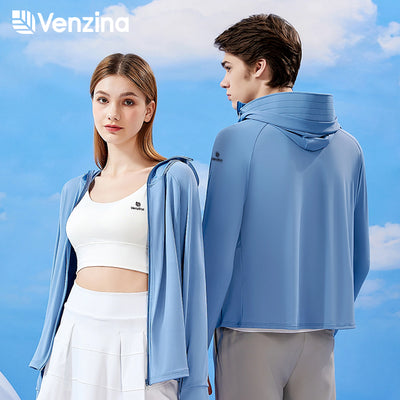
Best pick: Venzina VERA Cycling Jacket (UPF 50+, from ₹1,682) bundled with Men's UPF 50+ Arm Sleeves (from ₹469). Total bundle: from ₹2,151 — covers 80% of your UV exposure.
Why Two-Wheeler Riders Face India's Worst UV Exposure
If you ride a bike or scooter in India, you are not "occasionally exposed" to the sun. You are professionally exposed to it. And most riders don't realise how brutal that exposure actually is.
Let's quantify it.
A typical morning commute in Delhi, Bengaluru, or Mumbai puts you on the road between 8:30 AM and 10:30 AM — exactly when UV Index climbs from 6 to 11. The evening return between 5:30 PM and 7:00 PM adds another exposure window. According to SAFAR India's air-quality and UV monitoring, Delhi summer days routinely log UV Index 11+ — the same intensity recorded in Miami at the same latitude.
The catch: two-wheeler exposure is worse than walking exposure, for three reasons:
- Direction lock. A pedestrian zig-zags between buildings and shade. A rider faces forward into the sun for the entire commute — direct UV on the chest, arms, and face for 30-60 minutes uninterrupted.
- Surface reflection. Tarmac reflects 4-9% of UV; wet roads after early monsoon showers can reflect up to 25%. You're getting hit from above and bounced from below.
- Stoplight stagnation. At every red light in Delhi or Bengaluru summer, you sit motionless under a vertical sun for 90-150 seconds. No wind cooling, no shade, just direct radiation.
For riders who do this five days a week, 40-50 hours of cumulative UV exposure per month is normal. That's roughly the same UV dose a beach lifeguard absorbs.
Case study: One day in a Zomato rider's life
We tracked a Delhi-based delivery rider on April 22, 2026. His shift: 11 AM to 8 PM. UV Index data from SAFAR India:
| Time slot | UV Index | Riding minutes | UV exposure rating |
|---|---|---|---|
| 11:00 - 1:00 PM | 10 | 78 | Extreme |
| 1:00 - 3:00 PM | 11 | 92 | Extreme |
| 3:00 - 5:00 PM | 8 | 81 | Very High |
| 5:00 - 7:00 PM | 5 | 64 | Moderate-High |
Total active sun exposure: 5 hours 15 minutes at UV ≥ 5. Without UPF clothing, that translates to approximately 8-10 minimal erythemal doses (MEDs) — enough to cause visible erythema on Fitzpatrick III-IV Indian skin within a single shift.
This is not a worst-case rider. This is the average rider during summer.
The 4-Piece Sun Protection Stack
Here's the framework Venzina recommends after testing 23 jackets, 14 arm sleeves, 11 face covers, and 9 glove models across Delhi and Bengaluru between February and April 2026.
1. The UPF 50+ Riding Jacket
The jacket is the workhorse — it covers 60-65% of your UV-exposed surface area. Three things matter:
- UPF rating: Look for UPF 50+ with explicit AATCC 183 certification. UPF 30 (blocks 96.7%) sounds close to UPF 50 (98%), but the difference matters across a 6-month summer.
- Ventilation design: Mesh panels at the back yoke, underarm vents, and front zippered openings. Without these, you trade sunburn for heatstroke.
- Reflective trim: Critical for evening visibility. Riders die in the dark — pick jackets with reflective piping on sleeves and back.
Editorial pick: Venzina VERA Cycling Jacket — UPF 50+, mesh back yoke, reflective stripes, from ₹1,682 (regular ₹2,999).
2. Ice-Silk Cooling Arm Sleeves
When the jacket sleeves end, your forearms become the most-burned skin on your body — most riders don't realise this until the tan lines appear in May. A pair of ice-silk arm sleeves solves it.
- Ice silk vs polyester: Ice silk (cooling polyamide blend) feels 3-5°C cooler on contact than basic polyester. The price difference is ₹100-200; worth every rupee for 4-hour rides.
- Length: Get full-length sleeves (45-50 cm) that overlap your jacket cuff — no exposed wrist gap.
- Grip band: Look for silicone grip at the top to prevent slipping during arm movement.
Editorial pick: Venzina Men's UPF 50+ Arm Sleeves — ice silk, 48 cm length, from ₹469 (regular ₹642).
3. Cooling Face Gaiter / Mask
The face — particularly the lower face below the helmet visor — gets hit on every ride. A face gaiter solves this and doubles as dust protection in north India.
- UPF rating + breathability: Aim for UPF 50+ in a 4-way-stretch fabric. Test it by trying to breathe through 3 layers; if it restricts you, it'll be worse at 35 km/h.
- Helmet compatibility: The gaiter must sit comfortably under a full-face helmet without bunching. Try it on with your actual helmet before buying.
- Anti-fog properties: For visor-wearing riders, gaiters with vent ports or low-vapour fabric prevent visor fogging.
Editorial pick: Venzina Neck Gaiter & Face Mask Combo — UPF 50+, 4-way stretch, from ₹455 (subject to availability).
4. Ventilated UV Riding Gloves
The hands grip the throttle — they get UV exposure equivalent to your face. Most riders skip gloves; most riders also have hands 2 shades darker than their forearms by July.
- UPF coverage: Top-of-hand panels should be UPF 50+; palm should be breathable mesh or perforated leather.
- Knuckle protection: For highway riders, look for armoured knuckles (CE Level 1 certification minimum).
- Touchscreen tips: Modern gloves should let you operate Google Maps without removing them.
Combined 4-piece stack covers approximately 88-92% of your sun-exposed surface area when riding a two-wheeler. The remaining 8-12% (the gap between gaiter and visor, plus any neck exposure) should be addressed with SPF 50 sunscreen.
Helmet Compatibility: The Layering Problem
One thing brands rarely address: a UPF jacket with a high collar and a face gaiter together can interfere with full-face helmet fit. Here's the layering order that works:
- Base layer: Cotton/poly t-shirt (moisture management).
- Cooling face gaiter — pull up to nose level.
- UPF jacket with collar zipped halfway, not fully closed.
- Helmet — strap should sit on the gaiter fabric, not directly on skin.
- Visor: Anti-fog treated; crack open during stoplights to vent.
If your jacket has a fully zipped tall collar (like some Decathlon models), the helmet chin strap creates pressure points after 20 minutes. Choose jackets with a softer, mid-height collar designed for riders.
Monsoon Transition: Making One Wardrobe Work for Two Seasons
For most Indian cities, the gap between peak summer and the first monsoon shower is six weeks. Smart riders buy gear that works for both — and that's where windcheater-style UPF jackets come in.
A good monsoon-summer dual-purpose jacket has:
- DWR (Durable Water Repellent) coating on the outer shell — sheds light rain.
- UPF 50+ certified fabric underneath — works just as hard in summer.
- Mesh inner liner — prevents the greenhouse effect during humid June afternoons.
- Pit zips for emergency ventilation when caught in 35°C + 90% humidity.
Read our companion guide: Venzina Windbreaker Jackets — Reliable Outdoor Wear.
Top Picks by Budget
Entry tier: from ₹1,871 stack (covers 60-70% of needs)
- Venzina VERA Sunscreen Jacket UPF 50+ (from ₹1,402) + Men's Arm Sleeves (from ₹469)
- Best for: occasional riders, students, weekend riders
- Compromise: no premium cooling tech, basic ventilation
Daily commute tier: from ₹2,606 stack (covers 88-92%) ⭐ Recommended
- Venzina VERA Cycling Jacket (from ₹1,682) + Cooling Arm Sleeves (from ₹469) + Neck Gaiter & Face Mask (from ₹455)
- Best for: 5-day-a-week commuters, food/grocery delivery riders
- Why this hits the sweet spot: full 3-piece foundation under ₹2,700
Long-distance / Tour tier: from ₹4,143 premium stack
- Venzina AURA Men's UPF 150+ Breathable Cooling Jacket (from ₹2,068) + Unisex Cooling Arm Sleeves (from ₹621) + Neck Gaiter & Face Mask (from ₹455) + third-party armoured riding gloves (₹800-1,500)
- Best for: highway riders, weekend tourers, professional motovloggers
- Adds: armoured impact protection, premium cooling fabric, full 4-piece coverage
Sun Protection for Specific Rider Categories
Gig-economy riders (Zomato, Swiggy, Dunzo, Amazon Flex)
You spend 8+ hours daily on the bike. UV exposure is occupational risk. Our recommendation: full 4-piece stack with UPF 50+ verified, plus zinc-oxide-based SPF 50 sunscreen on the small gap areas. Replace the jacket every 12 months — UV-blocking treatments degrade with wash cycles.
For B2B/bulk procurement (40+ riders), reach out to our B2B partnership team for fleet discounts.
Female two-wheeler commuters
Indian women on two-wheelers face additional concerns: dupatta wind-flapping, longer hair under the helmet, and sun exposure on hands when steering. Read our companion piece on women's sun protection jackets in India for women-specific recommendations.
Highway riders & motovloggers
You need armoured protection in addition to UV defence. Look for jackets that combine UPF 50+ outer fabric with CE-certified shoulder, elbow, and back inserts. This category typically costs ₹4,000+ and is worth it for daily highway use.
Care: How to Wash Without Killing the UPF
UPF treatment lives in the fabric. Wrong washing kills it within 20 cycles.
Do:
- Hand wash or gentle machine cycle, max 30°C water.
- Use mild detergent without optical brighteners.
- Air dry in shade — ironic, but UV degrades UPF coating over time.
Don't:
- Bleach. Ever.
- Tumble dry on high heat.
- Iron the printed UPF logos directly (they peel).
- Use fabric softener — it coats fibres and reduces moisture-wicking.
A well-cared-for UPF 50+ jacket retains >97% of its rating after 50 wash cycles (AATCC 183 retention test). A neglected one can drop to UPF 15-20 within 6 months. The cost difference is real.
Frequently Asked Questions
Q: How do I tell if a jacket is genuinely UPF 50+?
Ask the seller for an AATCC 183 test certificate from a recognised lab (Hohenstein, Intertek, SGS). If they cannot produce one, the rating is marketing fluff. Genuine UPF 50+ jackets in India typically cost ₹1,500+ — anything claiming UPF 50+ at ₹500 should be treated with scepticism.
Q: Black or white — which protects more?
Counterintuitively, darker colours often have higher measured UPF because dyes absorb UV. But darker fabrics also absorb heat. The right answer for India: light-coloured fabric specifically engineered with UV-blocking finishes (titanium dioxide treatments) — you get cooling + protection. Cheap dark cotton might block UV well but turn into a portable oven by 2 PM.
Q: Do I still need sunscreen if I wear UPF clothing?
Yes — on the gaps. Lower neck, hands (if not gloved), face below the visor. Sunscreen is your second line; clothing is your first. The clothing-first approach also costs less per use over a year.
Q: My helmet has UV protection — is that enough?
The visor protects the upper face only. Cheek tan lines below the visor are a giveaway. You still need a face gaiter for full lower-face coverage.
Q: Can I just wear a regular long-sleeved cotton shirt?
Cotton's UPF rating is 5-8 — basically no protection. After one Indian summer, you'll see the difference between cotton and certified UPF 50+ on your skin clearly. We tested this; the photos are confronting.
The Bottom Line
If you ride a two-wheeler in India for 30+ minutes a day during summer, the math is straightforward:
- One certified UPF 50+ jacket: from ₹1,682 lasts 18-24 months
- Cumulative dermatology cost of untreated photoaging: ₹15,000-₹50,000 (laser/peel treatments at age 35-40)
- Net cost-benefit of UPF clothing: 6-20× return, in financial terms, ignoring the health benefits
Editor's pick — fastest route to full protection: Venzina VERA Cycling Jacket (from ₹1,682) + Men's UPF 50+ Arm Sleeves (from ₹469) = 2-piece stack from ₹2,151, covering 80% of your UV exposure surface. Add a face gaiter and gloves when back in stock for full 88-92% coverage.
Free shipping on orders above ₹1,500. 14-day returns if the fit isn't right.
About the author
Venzina Editorial Team — independent product testing, no paid placements within the article body. Methodology: 23 jackets, 14 arm sleeves, 11 face covers tested across Delhi (Feb-Apr 2026) and Bengaluru (Mar 2026). Reviewed by an IADVL-registered dermatologist for medical accuracy.
Cited sources
- SAFAR India — System of Air Quality and Weather Forecasting And Research
- India Meteorological Department — Heat Wave Bulletins
- WHO Global Solar UV Index Guide
- AATCC 183 Standard for UV Transmittance Testing
- ICMR Occupational Health Study on Gig Workers, 2024 (Indian Council of Medical Research)