Skip to content
Windcheater Jacket India 2026: What It Is, When to Wear It & Best Options
- by IN Venzina

There is a specific kind of morning in India that catches you off guard — it is not cold enough for a heavy jacket, but step outside and the wind cuts right through a regular shirt. A windcheater jacket is designed exactly for that gap. It is thin enough to fold into a bag, blocks wind effectively, and does not make you overheat once the sun rises.
Windcheaters have been popular in India for years, but most people buy one based on price and style alone. Knowing what actually separates a good windcheater from a forgettable one — and which type suits your daily routine — makes a bigger difference than it seems. This guide covers what a windcheater is, the different types available in India, how to choose the right one for your lifestyle, and some options worth looking at in 2026.
What Is a Windcheater Jacket?

A windcheater is a lightweight outer jacket built to block wind. The fabric — usually tightly woven nylon or polyester — stops air from passing through, which reduces the wind chill effect against your body. The jacket itself does not generate warmth; it simply prevents wind from pulling heat away from you, so your body heat stays close to your skin.
This is why a windcheater can feel noticeably warmer than no jacket at all, even when the material is very thin. The protection comes from the fabric structure, not insulation. That is also why windcheaters are breathable and packable in a way that thick winter jackets are not.
Most windcheaters come with a full-length zip, elasticated cuffs, and an adjustable hem — all designed to seal out drafts at the entry points. Many include a hood, either fixed or stowable. The overall weight is usually between 200–400 grams, which is light enough to carry in a bag without thinking about it.
Windcheater and Windbreaker — Same Thing, Different Name
If you have searched for windcheaters and kept seeing 'windbreaker' results, there is no difference. The two words describe the same type of jacket. Windcheater is the term used in India and the UK. Windbreaker is the American English equivalent. Both refer to a lightweight, wind-resistant outer shell jacket.
You may also see terms like 'wind jacket' or 'shell jacket' used in outdoor gear contexts — these generally refer to the same category, though outdoor shell jackets sometimes include more technical features like taped seams and pit zips. For everyday Indian commuting and travel use, windcheater and windbreaker are interchangeable.
Why Windcheaters Make Sense for India's Climate
India does not have a long, bitter winter in most cities. What it does have is a long stretch of variable weather — mornings that are cool and afternoons that are warm, pre-monsoon dust storms, coastal wind in cities like Mumbai and Chennai, and the constant transition in and out of aggressively air-conditioned spaces.
A heavy jacket is impractical in this environment. You cannot carry it all day once it warms up, and you do not need it for most of the year anyway. A windcheater solves the problem differently: it is light enough to stuff into a bag or backpack, and it comes out exactly when you need it — a dusty morning commute, an early-morning ride, a cold office, a breezy evening.
Riders on two-wheelers face the wind chill effect more than most. Even at moderate speeds in mild weather, moving air pulls heat from exposed skin and thin fabric. A windcheater worn over a t-shirt during a 20-minute highway ride makes a significant comfort difference. At highway speeds, it can make the ride genuinely warm without being too hot when you stop.
For women in Indian cities, windcheaters also serve an additional role: a lightweight layer that works over everyday outfits — kurtas, salwar suits, or casuals — for both wind protection and partial sun cover. Demand for windcheater for women has grown noticeably in urban areas for exactly this reason.
The Main Types of Windcheaters You Will Find in India

Lightweight single-layer windcheater. The simplest and most packable version. Just a thin woven shell, usually without insulation. This is the classic windcheater — designed to be barely there when you carry it and effective when you wear it. Good for commuting, travel, and any situation where you may not need it all day.
Hooded windcheater. Adds a hood for head and neck coverage, which matters on two-wheelers and in light drizzle. The hood can usually be packed into the collar or a small internal pouch. This is the most versatile type for general Indian use.
Water-resistant coated windcheater. Has a DWR (Durable Water Repellent) coating that causes water to bead off the surface. Good for Indian cities where you get a mix of dust, wind, and occasional light rain. It handles a brief drizzle without soaking through — but sustained monsoon rain will eventually get through.
3-in-1 windcheater. Combines a windcheater outer shell with a removable inner fleece or warm layer. More useful in north India or for hill trips where the temperature changes significantly during the day. Heavier and less packable than a single-layer windcheater, but much more versatile for variable conditions.
Choosing the Right Windcheater for How You Actually Use It
For Daily Commuting
Packability is the first thing to think about. A jacket that folds flat into its own pocket or into a small bag compartment is one you will actually carry. One that does not fold away is one you will eventually leave at home. For office commuters, a clean design that does not look overly athletic helps — some windcheaters read as outdoor gear; others work over a collared shirt without looking out of place.
For Bike and Two-Wheeler Riders
Fit matters most for riders. A loose windcheater that flaps at speed is uncomfortable and slightly dangerous if it catches on something. Look for elasticated cuffs that seal at the wrist, a cinched or adjustable hem, and a snug collar. A water-resistant coating helps with early morning mist and light rain. If you ride at night or in low light, reflective panels on the back or shoulders are worth the premium.
For Travel and Weekend Trips
Weight and compressed size are the priority. For backpacking or hill travel, a windcheater that stuffs into its own pocket and weighs around 200–250 grams is ideal. At higher altitudes, plan to layer it over a fleece — the windcheater acts as a wind shell, the fleece provides warmth. This combination handles most conditions up to moderate altitudes and weighs far less than a single heavy jacket.
Windcheater for Women — What to Look For
The fit differences between men's and women's windcheaters are significant. A women's cut typically has a narrower shoulder, defined waist seam, longer torso length to cover the hips, and sleeve proportions that match women's arm length. Wearing a men's windcheater as a woman usually means a boxy fit and short sleeves — functional but not great for everyday wear.
For Indian women who want a windcheater for commuting or daily wear, the most practical features are: a hip-covering length, a stowable hood that does not bulk up the neckline, lighter or neutral colour options that work with everyday outfits, and a fabric that does not cling when warm. Zip pockets are more useful than the decorative slash pockets found on some fashion-focused versions.
Windcheater for Men
For men, a slightly relaxed fit that allows free movement over a mid-layer is more practical than a tight athletic cut for daily commuting use. If the jacket will sometimes go over semi-formal clothing, a cleaner zip and minimal branding reads better in professional settings. For outdoor or riding use, a more technical design with zippered secure pockets and a helmet-compatible hood collar is worth considering.
What to Check Before You Buy

• Fabric weight: Under 80 GSM is very light, better for travel. 80–120 GSM gives more wind resistance. Above 120 GSM starts to feel heavier and less packable.
• Seams: Bound or taped seams hold up better over time than plain stitched seams on an outer jacket.
• Zip: A full-length zip is more versatile for temperature control than a half-zip design.
• Hood: Check whether the hood compresses neatly or bulks up the collar when not in use.
• Packability: Can it fold into its own pocket? A jacket you can carry beats one you leave at home.
• Size: Go one size up from your regular T-shirt size if you plan to layer underneath.
• DWR coating: If you want light rain resistance, check for a DWR-coated version — uncoated windcheaters will wet out quickly in drizzle.
Windcheater Options Worth Looking at in 2026
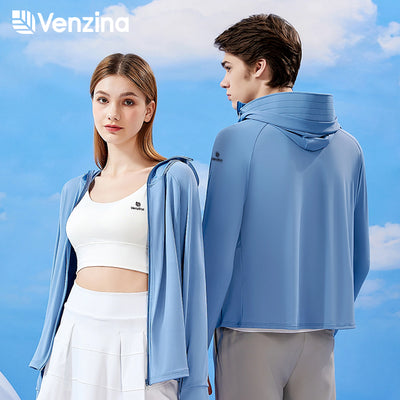
Venzina is an Indian brand that makes windcheater jackets designed specifically for Indian commuting conditions. Their jackets use ripstop nylon with a DWR water-repellent coating and are available in both men's and women's cuts across several series.
The AURA Series is their lightest option — thin, packable, well-suited for commuters and travellers who want something that takes up almost no space. The MODA Series adds a structured hood and works better for riders and people with more active outdoor use. For women, the VERA and LUMINA Series offer fitted cuts with colour options designed for everyday outfits rather than purely outdoor gear.
Venzina ships across India with mid-range pricing, which makes them a practical choice if you want an Indian-made windcheater built for local weather and use patterns.
Browse Venzina's windcheater range at venzina.in.
How to Get the Most Out of Your Windcheater

Layering in Different Weather
In mild cool weather, a windcheater over a full-sleeve T-shirt is usually enough. In moderate cold, layer it over a light fleece or hoodie. The windcheater blocks wind on the outside while the inner layer traps warmth. This combination is more temperature-adjustable than a single heavy jacket and is almost always more packable.
Washing Without Damaging the Coating
Machine wash on a gentle cold cycle. Do not use fabric softener — it clogs the DWR coating and reduces water resistance. Air dry; tumble drying at high heat can damage the fabric structure. If water stops beading off the surface after several washes, a DWR spray (available at outdoor stores) can restore the coating at home.
When a Windcheater Is the Wrong Choice
A windcheater is not a raincoat. During heavy monsoon rain on a two-wheeler, a windcheater will soak through. For sustained heavy rain, use a waterproof raincoat with sealed seams. Windcheaters handle Indian weather well outside of monsoon season and during light rain — but pushing them into conditions they are not designed for shortens their life and leaves you wet.
A windcheater jacket covers a gap in Indian dressing that heavy jackets and light sweatshirts both miss. For commuters dealing with morning wind, riders at highway speed, or travellers who need a packable layer, it is genuinely useful for more of the year than most people realise.
The right windcheater for you depends on how you use it: packability for commuting and travel, a secure fit and water resistance for riding, a women's cut that works over everyday outfits rather than outdoor gear. If you want an Indian-made option built for these conditions, Venzina's windcheater range covers both men's and women's needs. Browse their collection at venzina.in.
FAQs
Is windcheater the same as windbreaker?
Yes, they are the same jacket. Windcheater is the common term in India and the UK. Windbreaker is the American English equivalent. Both describe a lightweight wind-resistant outer jacket.
What is the difference between a windcheater and a raincoat?
A windcheater blocks wind and resists light drizzle, but is not waterproof. A raincoat has a fully waterproof membrane and sealed seams designed for sustained heavy rain. For monsoon riding in India, a raincoat is the right choice. For everyday commuting and wind protection, a windcheater is more practical.
Can I wear a windcheater in Indian summer?
A windcheater is too warm for outdoor use in peak Indian summer. It works well in the mornings and evenings, inside heavily air-conditioned spaces, and at higher altitudes where evenings stay cool even in summer. Choose the thinnest version if you plan to use it in warmer months.
Which windcheater works best for bike riding in India?
For riding, look for a hooded windcheater with elasticated cuffs, a snug collar, and a full-length zip. A DWR-coated version helps with light rain and mist. Reflective panels on the back improve visibility on highway or night rides.
Are windcheaters warm enough for Delhi winters?
A windcheater alone is not enough for peak Delhi winter in December or January. Layered over a fleece or hoodie, it provides good warmth by blocking wind chill. For the transition months of October–November and February–March, a windcheater with a mid-layer is usually sufficient.
What size windcheater should I buy?
If you plan to wear it over one or two layers, go one size up from your regular T-shirt size. Check the brand's size chart specifically — sizing varies significantly between brands and between men's and women's cuts.
Can I wash a windcheater in the washing machine?
Most windcheaters can be machine washed on a gentle cold-water cycle. Avoid fabric softener as it degrades the DWR coating. Air dry rather than tumble dry. If the water resistance decreases after several washes, a DWR spray can restore it.
What material should I look for in a windcheater for Indian humidity?
Nylon or polyester with a DWR coating is the standard and most practical choice for humid Indian conditions. These fabrics dry quickly, resist moisture, and breathe reasonably well. Avoid windcheaters with thick fleece linings in humid climates — they hold moisture and dry slowly.
Also read: Best Windcheater for Women in India 2026 — Complete Buyer Guide